
Qualifying as a beauty professional is a huge achievement, but your learning does not stop the day you receive your certificate.
The beauty industry moves quickly. New products appear, techniques develop, client expectations change and professional standards continue to evolve.
That is where Continuing Professional Development, or CPD, comes in.
CPD gives beauty therapists, practitioners and training providers a way to keep learning throughout their careers and, importantly, to keep a record of that development.
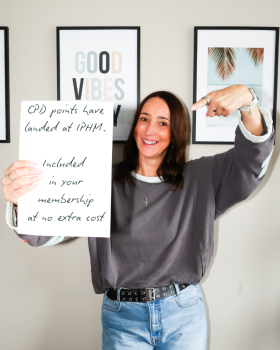
At IPHM Beauty, we believe ongoing learning is an important part of professionalism. Through IPHM CPD, eligible learning can be reviewed under IPHM’s CPD criteria, with CPD points assigned where the applicable requirements are met.
Think of it like this:
You’re probably already learning. CPD simply gives that learning somewhere to live.
What Does CPD Mean in the Beauty Industry?
CPD stands for Continuing Professional Development.
In simple terms, it is the learning and development you undertake after your initial qualifications to maintain your knowledge, develop new skills and continue growing professionally.
For a beauty professional, that could include learning more about:
- new treatments or techniques
- client consultation
- health, safety and hygiene
- product knowledge
- contraindications and complications
- business management
- marketing and client experience
- professional boundaries
- changes within the beauty industry
CPD does not necessarily mean going back to college or completing another major qualification.
It is about continuing to develop throughout your career rather than assuming your education finished when you first qualified.
Why Is CPD Important for Beauty Therapists?
Your clients are trusting you with their skin, hair, nails, appearance and, in many cases, their confidence.
That makes staying informed important.
CPD can help you keep your knowledge current, refine your existing skills and identify areas where you may want further development.
It can also help you demonstrate that you take your profession seriously.
You may have qualified several years ago, but being able to show that you have continued learning since then tells a much stronger story about the professional you are today.
CPD can help you:
- keep your knowledge fresh
- improve existing skills
- learn about developments within your speciality
- build confidence
- identify gaps in your knowledge
- demonstrate a commitment to professional development
- keep evidence of the learning you have completed
Professional development is not about collecting certificates for the sake of it.
It is about becoming better at what you do.
What Counts as CPD for Beauty Professionals?
One of the biggest misconceptions about CPD is that it only counts if you attend a formal classroom course.
Professional development can take many different forms.
Depending on the activity and applicable CPD criteria, learning might include things such as:
Courses and workshops
Developing a new skill or expanding your knowledge in an existing area.
Masterclasses
Learning from experienced professionals within your speciality.
Industry events and conferences
Keeping up with trends, products, techniques and professional discussions.
Online learning
Structured webinars, digital training and other relevant educational activities.
Business development
Learning that helps you improve areas such as client experience, marketing, policies or running your beauty business more professionally.
The important part is that the activity genuinely contributes to your professional learning.
What Is a CPD Record?
A CPD record gives you one place to document your ongoing professional development.
Instead of trying to remember which masterclass you attended eighteen months ago or searching through emails for certificates, you can build a clear record of your learning over time.
IPHM Beauty members can build a record of their ongoing professional development and download their IPHM CPD record as a PDF from their members dashboard whenever they need evidence of their learning.
That can make it much easier to demonstrate the work you have put into keeping your skills and knowledge current.
Why Should You Keep a CPD Record?
Because future you will be very grateful that you did.
As your career grows, you may complete dozens of courses, workshops, masterclasses and learning activities.
Having a record helps you see:
- what you have already learned
- when you completed it
- which areas you have developed
- where there may still be gaps
- what you would like to learn next
It can also provide evidence of your ongoing learning if you are ever asked for it.
But perhaps most importantly, it helps turn professional development into something intentional.
Instead of completing random training whenever something catches your eye, you can start thinking about the professional you want to become and choose development that genuinely supports that goal.
CPD Is Not the Same as a Qualification
This distinction is important.
CPD supports ongoing professional development, but it does not automatically replace the qualifications, licences, insurance requirements or other permissions that may be required to perform a particular treatment.
IPHM CPD certification confirms approval under our own process and does not, by itself, represent a regulated qualification or guarantee recognition by every employer, insurer, professional body or external organisation.
So if you want to introduce a new treatment into your business, always check what qualifications, practical training, insurance and other requirements apply before offering it to clients.
Think of CPD as continuing your professional education, rather than a shortcut around initial training requirements.
Why CPD Matters for Beauty Training Providers Too
CPD is not just relevant to therapists.
If you run a beauty academy or provide professional training, continuing to develop your own knowledge is equally important.
You are teaching the next generation of beauty professionals.
That means your knowledge, course content and approach should continue to develop alongside the industry.
For training providers, CPD can help you:
- keep course knowledge current
- develop as an educator
- improve how you support students
- stay informed about professional standards
- strengthen your training business
- demonstrate an ongoing commitment to education
IPHM Beauty assesses training providers and their courses against its accreditation requirements, with course quality, tutor qualifications and professional practices forming part of that approach.
Ongoing learning naturally supports that commitment to quality.
How to Make CPD Part of Your Beauty Career
It does not need to become another overwhelming task on your to-do list.
Start small.
Ask yourself:
What would make me better at my job this year?
Maybe you want to improve your consultation skills.
Perhaps there is a technique you want to understand more deeply.
Maybe your next area of development has nothing to do with treatments and everything to do with running a stronger business.
You could even set yourself a simple professional development plan for the year:
Learn something. Record it. Apply it. Reflect on it.
Then repeat.
The goal is not to complete as much training as possible.
The goal is to keep growing.
How IPHM Beauty Supports Ongoing Professional Development
IPHM Beauty is an independent accreditation body supporting beauty professionals, practitioners and training providers.
Alongside professional accreditation, IPHM Beauty now places an increased emphasis on ongoing learning through IPHM CPD, giving professionals a way to explore eligible CPD learning and build a record of their continued development.
For us, the message is simple:
Your first qualification is the beginning of your professional journey, not the end of it.
The strongest beauty professionals stay curious.
They keep learning.
They update their knowledge.
They recognise when there is more to understand.
And they take pride in being better than they were a year ago.
You’re Already Learning. Now Give That Learning Somewhere to Live.
Think about everything you have learned since you first qualified.
The workshops.
The masterclasses.
The new techniques.
The business lessons.
The industry changes.
The conversations that completely changed the way you work.
That development matters.
CPD gives you a way to recognise it, record it and continue building on it.
Because professionalism is not about knowing everything.
It is about being committed to never stopping learning.
Frequently Asked Questions About Beauty CPD
What does CPD stand for in beauty?
CPD stands for Continuing Professional Development. It refers to ongoing learning undertaken throughout your professional career to maintain and develop your knowledge and skills.
Do beauty therapists need CPD?
The exact requirements depend on your profession, treatments, insurer, location and any relevant regulatory or professional requirements. Even where a specific amount of CPD is not mandatory, ongoing professional development can still help practitioners maintain their knowledge and demonstrate a commitment to professional standards.
What can count as CPD for a beauty therapist?
Depending on the relevant CPD criteria, professional development may include structured courses, workshops, masterclasses, industry learning, webinars and other educational activities that genuinely contribute to your professional knowledge or skills.
Does CPD allow me to offer a new beauty treatment?
Not automatically. CPD does not replace any qualifications, licences, practical training, insurance requirements or legal permissions needed for a treatment. Always check the requirements for the service you intend to offer.
Does IPHM Beauty offer CPD points?
Through IPHM CPD, eligible learning can be reviewed and approved under IPHM’s CPD criteria, with CPD points assigned according to the applicable requirements.
Can I keep evidence of my CPD with IPHM Beauty?
Yes. IPHM Beauty members can build a record of their professional development and download their IPHM CPD record as a PDF from their members dashboard.
Disclaimer
The content published on this blog is for informational and educational purposes only. It represents the views and experiences of the author(s) and is not intended to replace professional medical advice, diagnosis, or treatment.
Discussions of natural, complementary, or alternative therapies are shared as personal or anecdotal experiences unless otherwise supported by credible scientific evidence. These are not claims of cure or guaranteed results.
Readers are strongly encouraged to consult qualified healthcare professionals before making any decisions related to their health or well-being. IPHM does not endorse specific therapies, products, or practitioners unless explicitly stated.
By engaging with this content, you acknowledge that any reliance on the information provided is at your own risk.